

IMAGING LAW, GENDER & JUSTICE
In law, an image can testify. It enters the record as evidence, carrying the weight of proof and persuasion. Yet beyond the courtroom, photographs testify differently, not to confirm, but to question; not to fix meaning, but to open it. Through them, we are forced to reckon with our act of witnessing; to face the hierarchies of sight itself: whose truths are seen, whose voices silenced, whose realities erased.
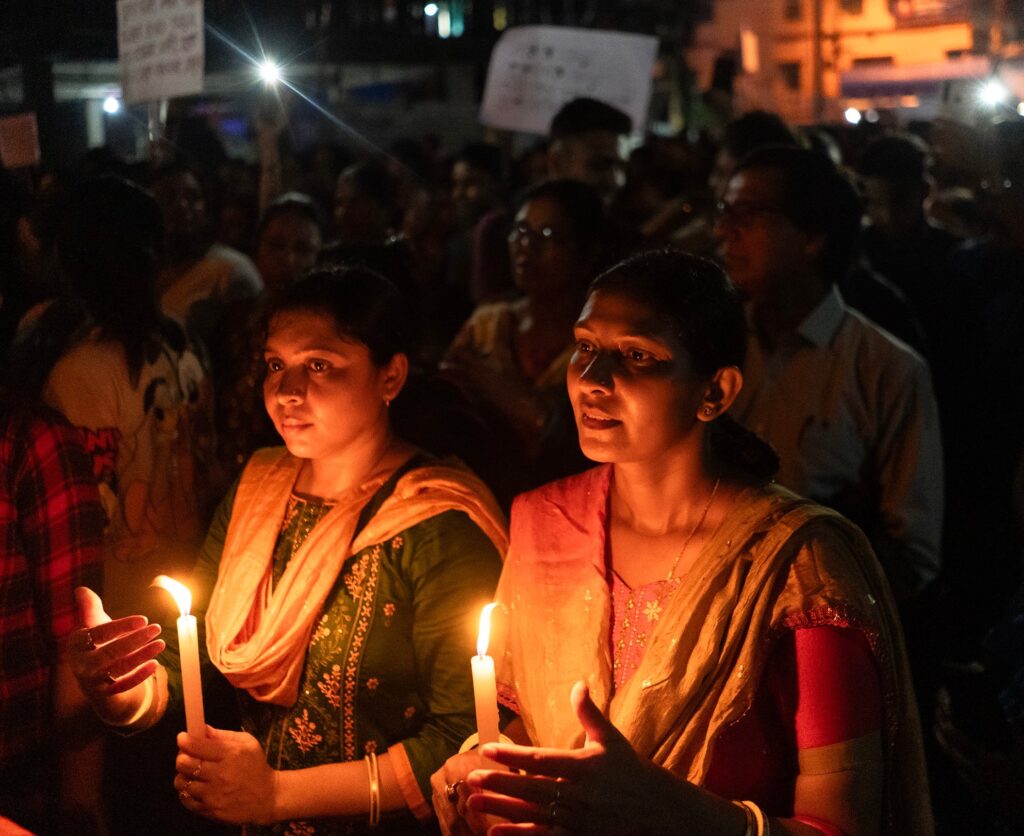
In an age of rollback and control, the struggle for gender justice deepens. Rights are curtailed, protest becomes a site of surveillance, and the law polices not only behaviour but the body itself. In this climate of escalating biopolitics, the photograph functions as counter-record: not the instrument of the state, but of dissent.
Since its inception, This is Gender has wielded photography as a tool of inquiry, to see differently, challenge power, and catalyse change. The inaugural Global 50/50 Law and Justice Report, surveying gender equality across the global legal sector, became an invitation to look deeper: to ask how gender moves through law, through justice, through the stories we tell of fairness and harm.
From this global open call — spanning countries, identities, and visual languages — emerge images that reveal how law and justice are lived, contested, and reimagined. Through portraiture, documentary, and abstraction, the artists gathered here use photography to expose how systems of law and governance are gendered at every level. Their work traces the collisions between fairness promised and fairness denied — from the gendered architecture of the courtroom to the intimacies of care, fear, and survival.
Selected by an international jury of artists, curators, and advocates, these images reflect a collective effort to reimagine what justice can look like.
Where legal systems erase, these images restore. Where records omit, they remember. In doing so, they build counter-archives, living records of resistance and reimagination across the gender spectrum.
Here, the camera becomes a tool not of surveillance but of presence: a means through which artists reclaim who gets to testify and what counts as proof. Fragmentary and interpretive, these photographs resist objectivity. They expose how justice, like the image itself, is shaped by power, proximity, and empathy — reminding us that to picture justice is not only to document it, but to imagine it otherwise.
ARCHITECTURES OF POWER
Winning image:
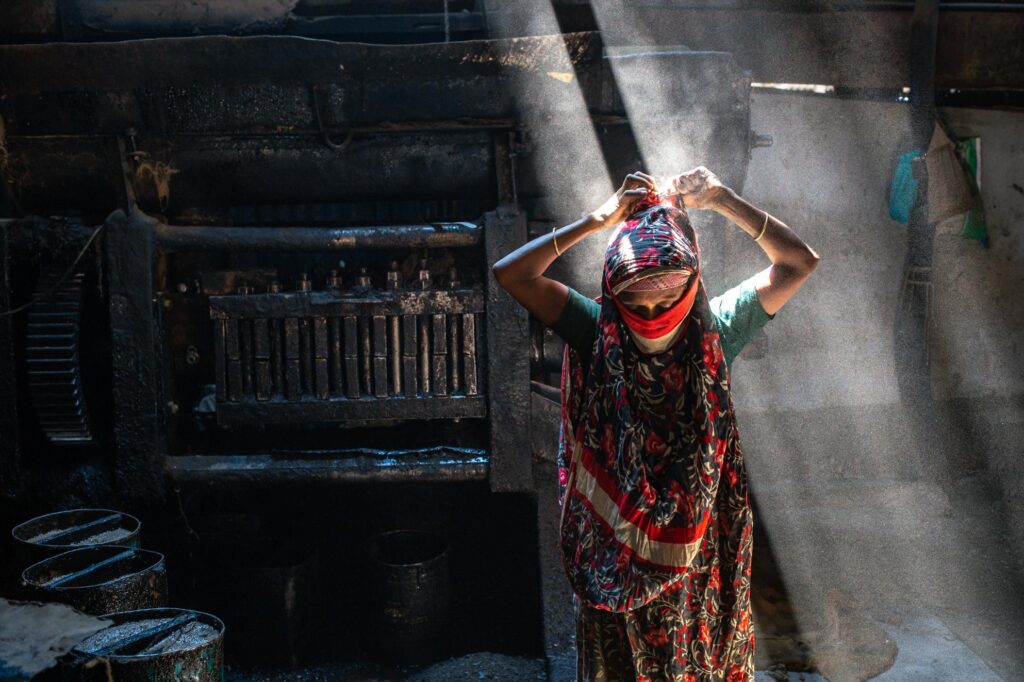
CROWN OF CURSE AND LIGHT, (Dhaka, Bangladesh – 2022), Jahid Apu
What the judges say:
‘This image stood out for its quiet strength and formal sophistication. Through light, gesture, and composition, it conveys the carceral and economic injustices shaping Rahima’s life without resorting to spectacle. The photographer’s approach resists the extractive gaze so often cast upon women made vulnerable by the state, instead offering a portrayal marked by intimacy, care, and respect. It is a work of profound empathy — transforming a story of isolation into one of dignity and endurance.’
Every system tells a story about who is valued and who is expendable.
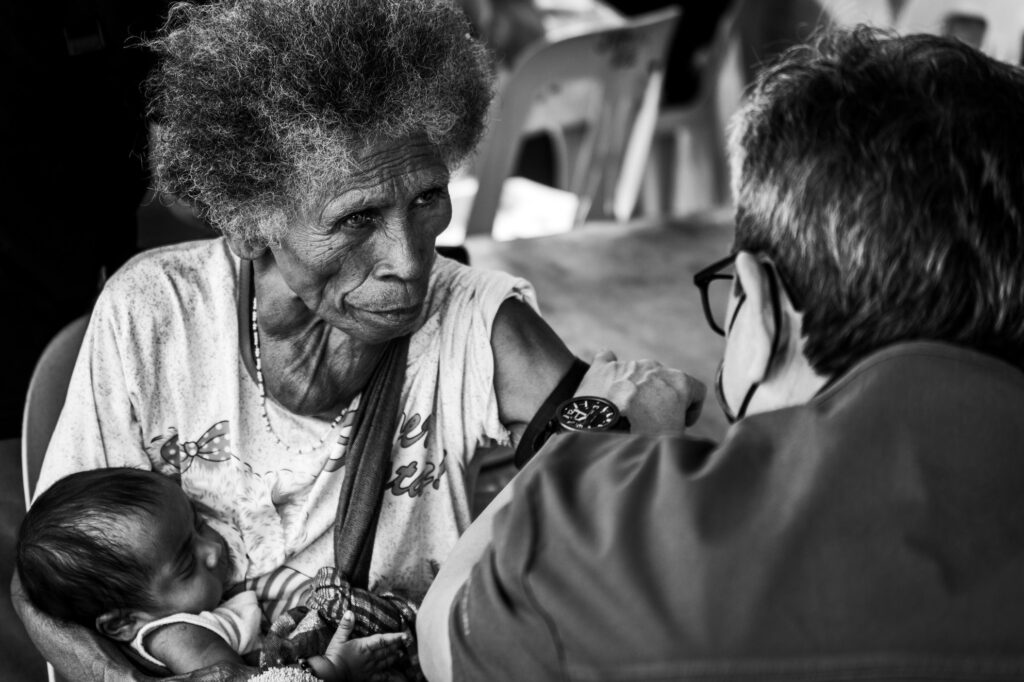
From the courtroom to the classroom, the hospital to the workplace, structures define the boundaries of justice. They promise equality but often reproduce the very hierarchies of gender, race, and class they were meant to dismantle.
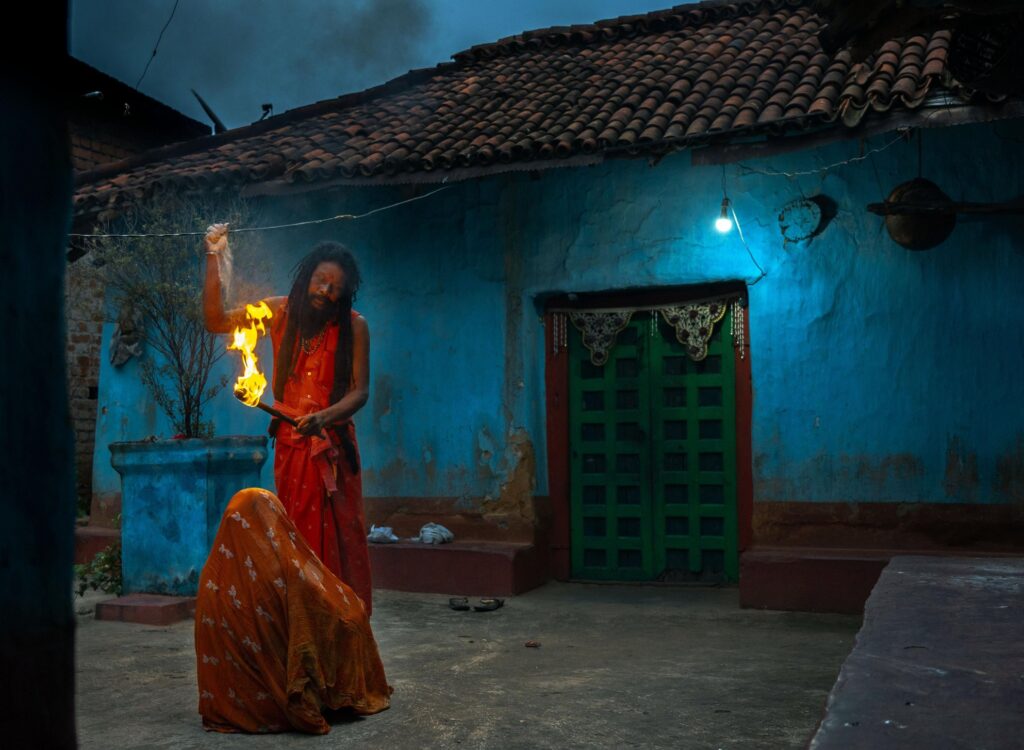
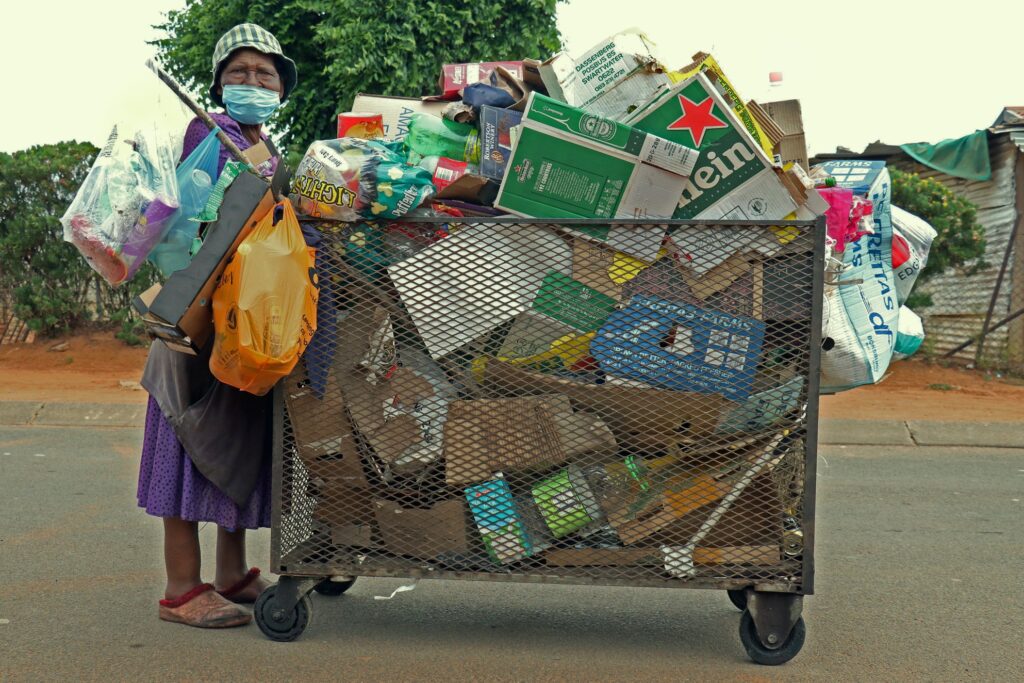
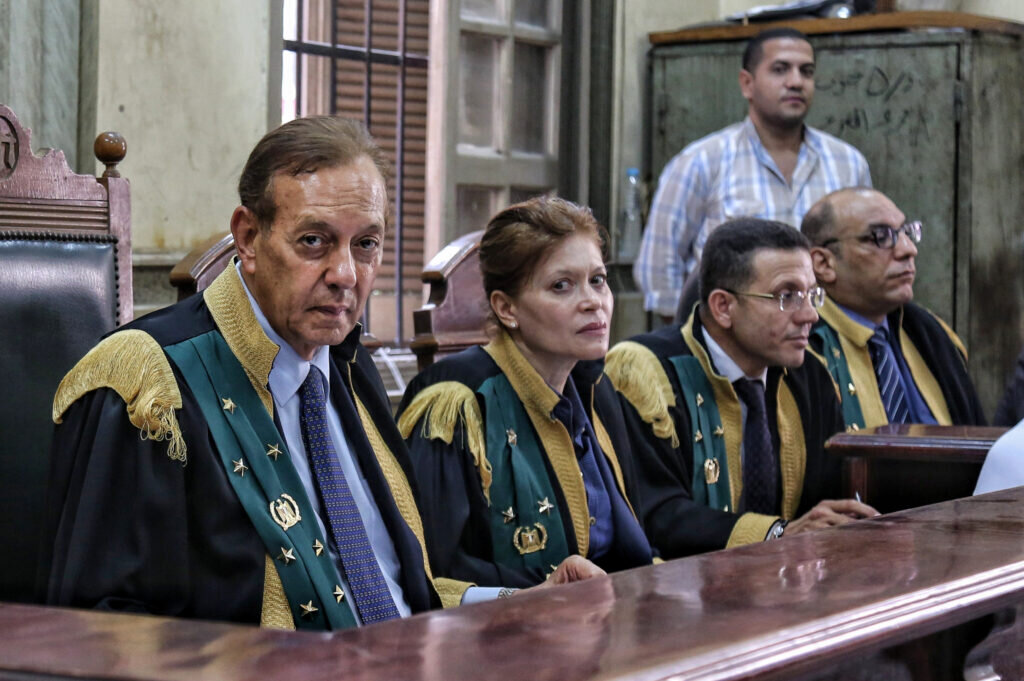
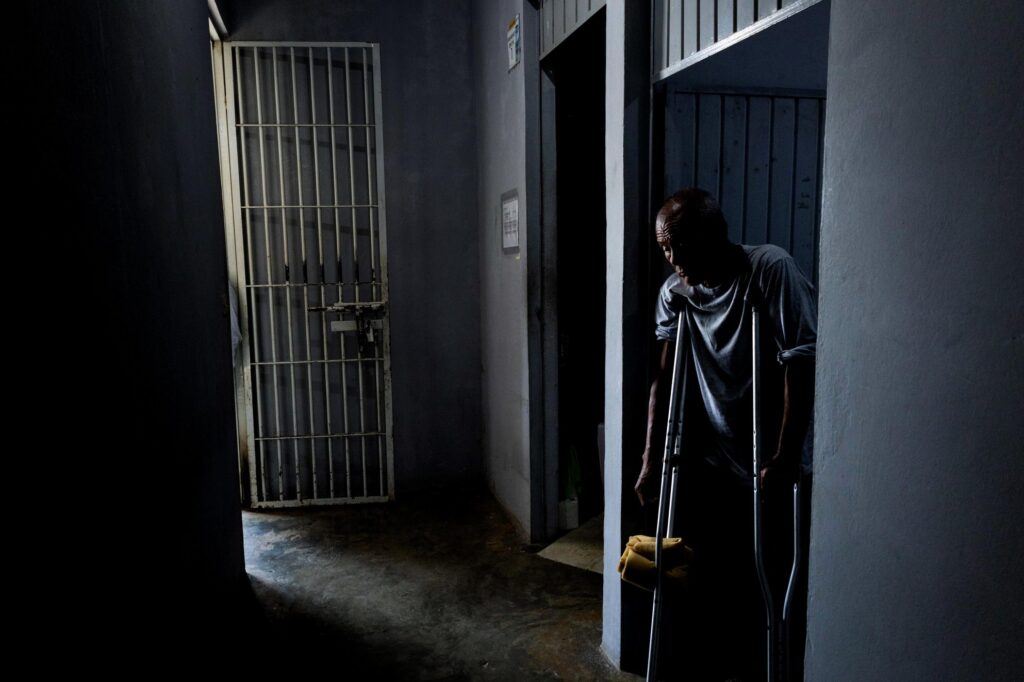
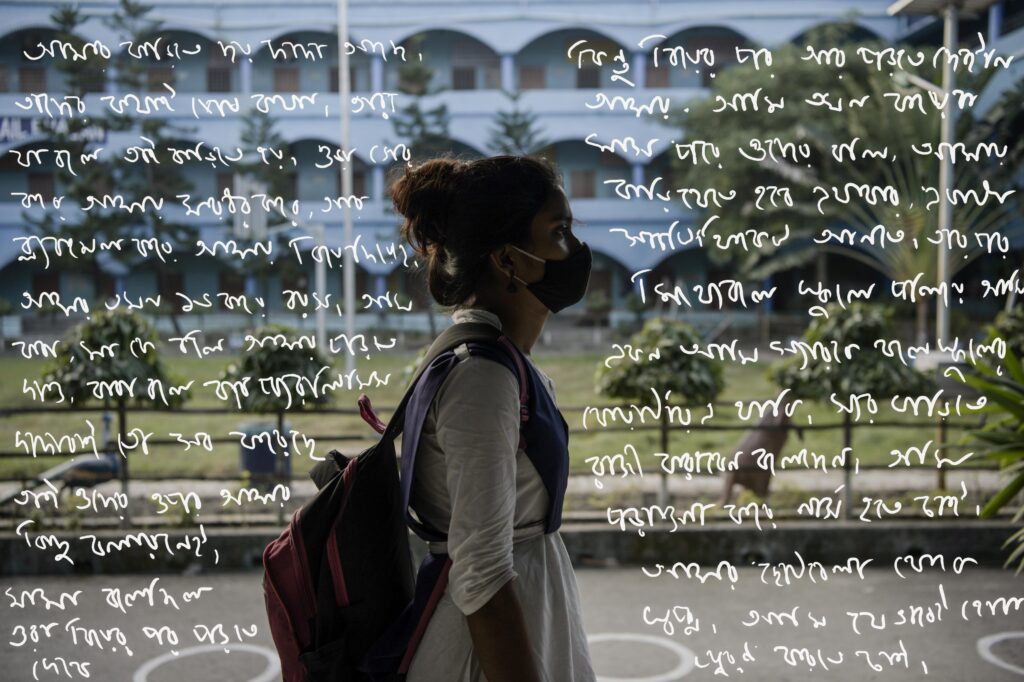
The works in this section expose how systems entrench inequality. Through an intersectional, gendered lens, they trace how power operates through bureaucracies and procedures. A woman’s prospects shaped by the afterlife of imprisonment; girls walking miles to reach education denied by custom; precarious labourers navigating danger for survival; and a lone female judge among male peers, reflecting a system that rarely represents all.
Across these images, justice emerges not as an institutional guarantee but as something fought for within the gaps; acts of endurance and refusal that lay bare the weight of the system.
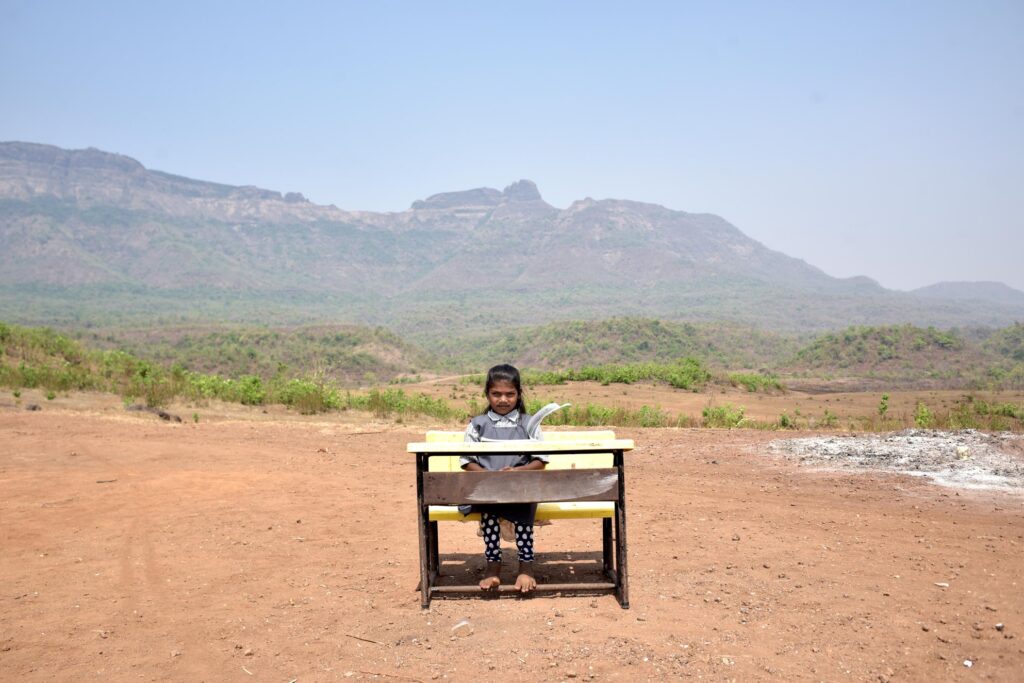
BEYOND THE FIRST STEP: A GIRL’S JOURNEY THROUGH BARRIERS TO EDUCATION, (Badlapur, Maharashtra, India – 2023), Sandeep Rasal
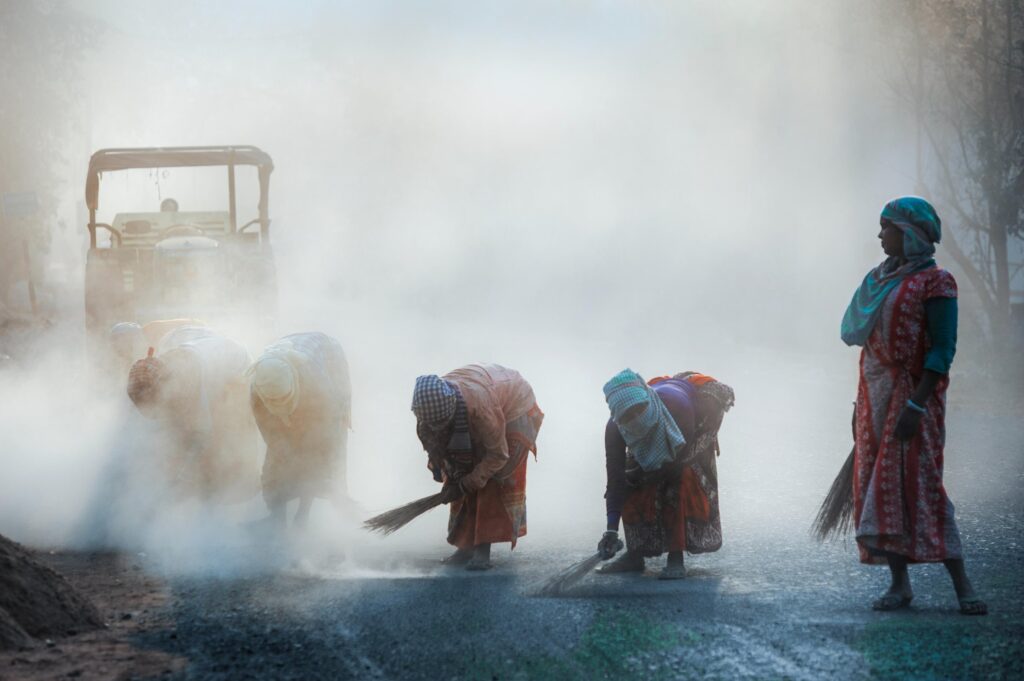
Dipak Ray
GEOGRAPHIES OF JUSTICE
Winning image:
PANH-Ô KAYAPÓ, A VOZ DA RESISTÊNCIA, (Brazil – 2025, Ester Menezes)
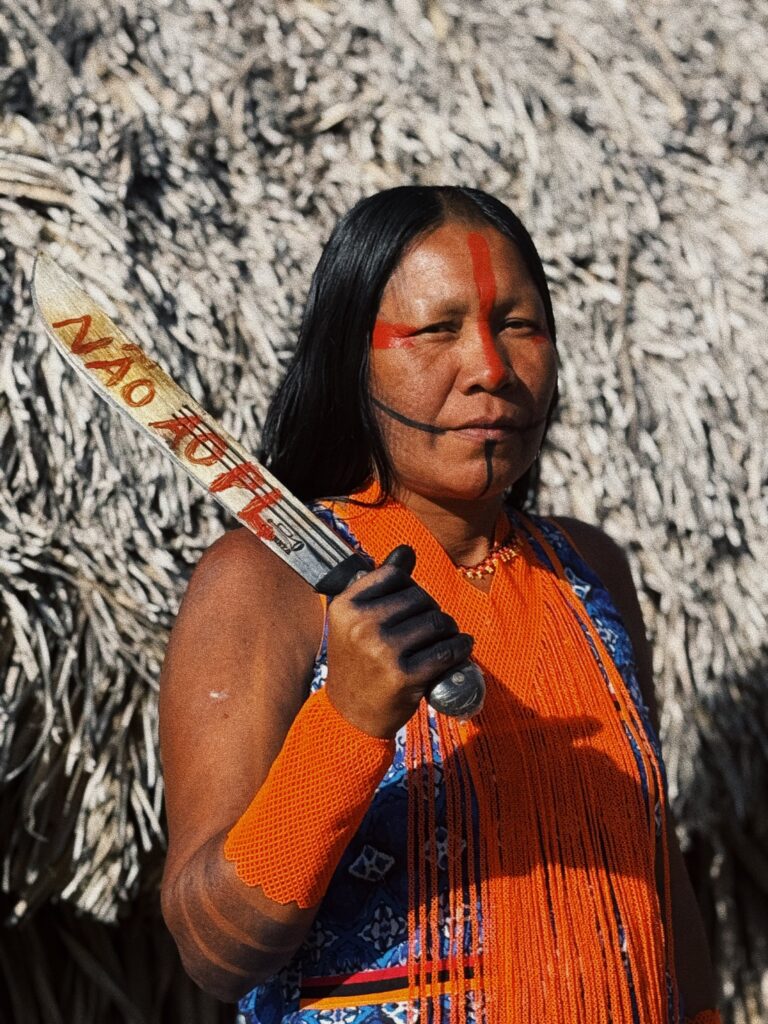
What the judges say:
‘Through a direct yet composed gaze, this portrait conveys strength without spectacle. Panh-ô’s stance, both grounded and defiant, holds the viewer in a quiet exchange of power. The image demonstrates how careful, deliberate visual practice can mirror the very principles of ecological protection it depicts—attentiveness, balance, and respect.‘
Justice has a geography. It is mapped through courtrooms and protest sites, detention centres and city streets, across borders and territories marked by extraction and neglect.
Law takes shape through space, determining who may move freely, who is contained, and who bears the weight of environmental collapse.
The artists in this section reveal how law is written into the landscape and woven into the fabric of place — through borders, surveillance, extraction, and displacement — shaping whose safety and belonging are secured or denied.
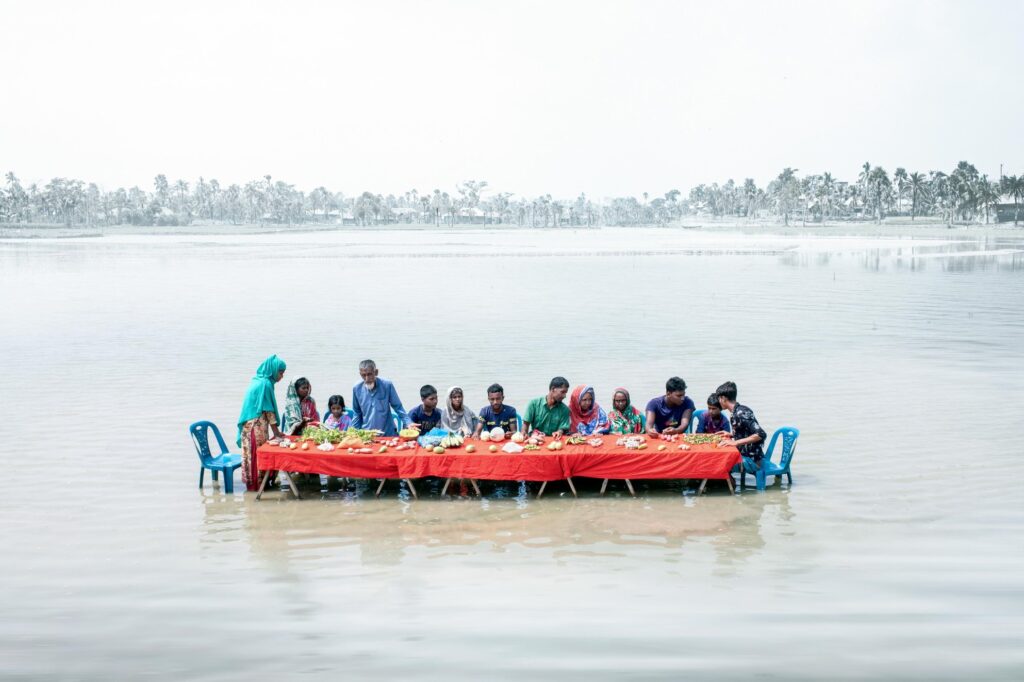
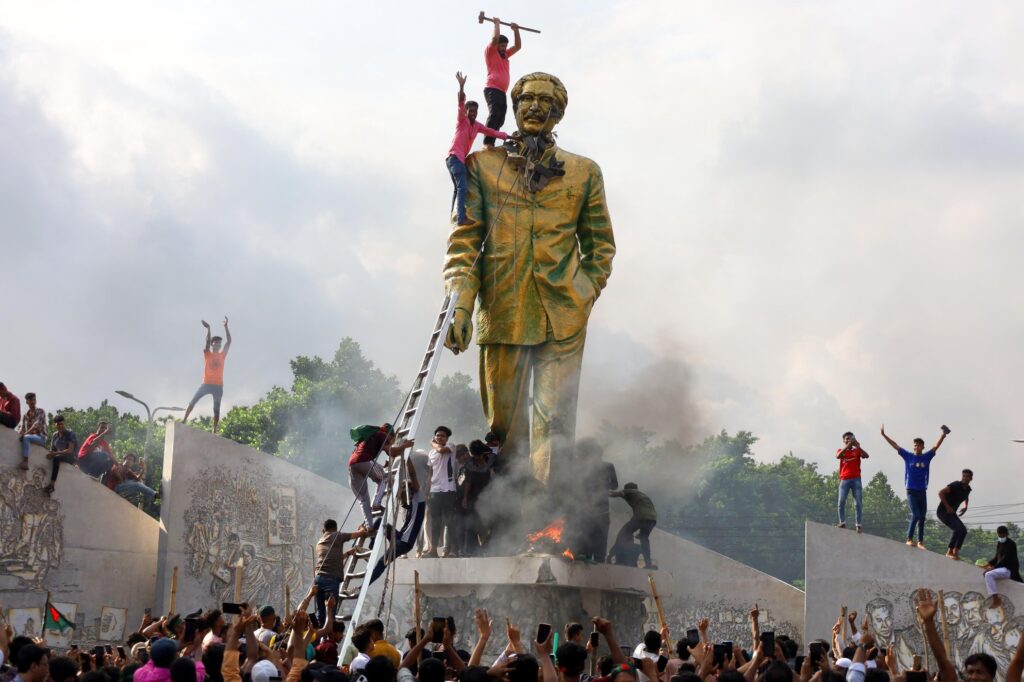
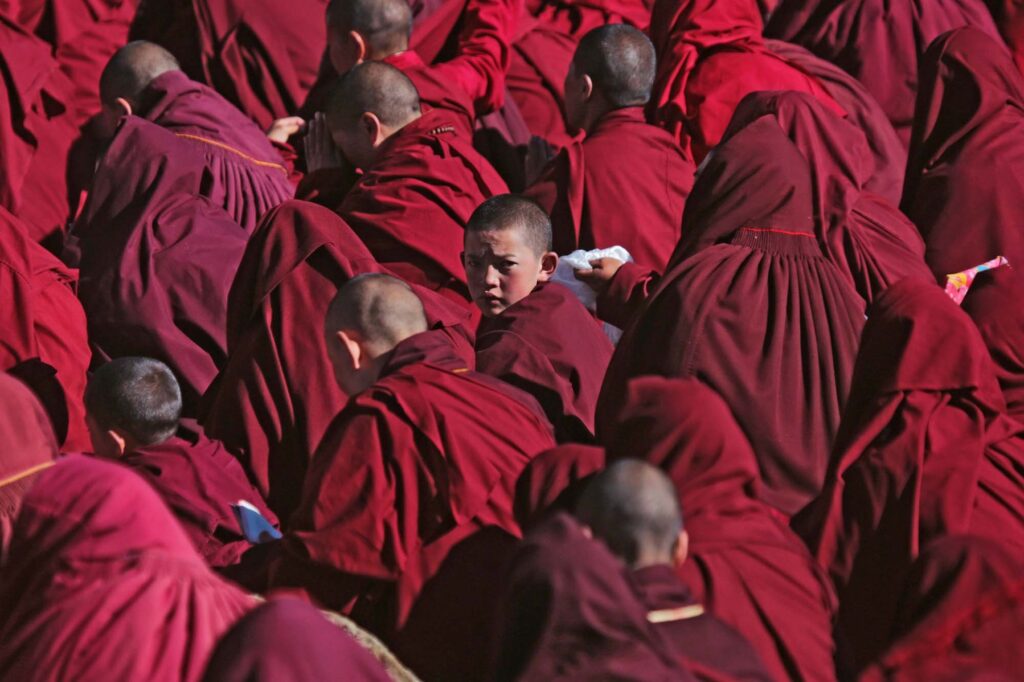
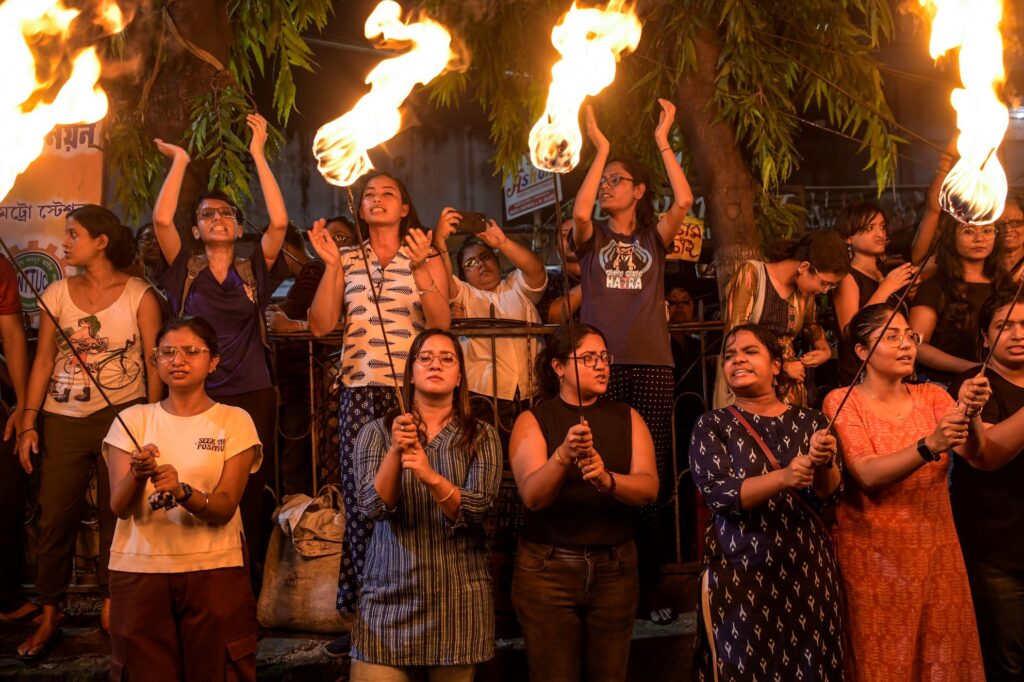
In Bangladesh, protestors reclaim public monuments as acts of defiance, rewriting civic space through collective presence. In Latin America, Indigenous feminist leaders confront extractive industries and state neglect, linking environmental collapse to gendered violence. Elsewhere, communities navigate flood and recovery; women reclaim streets in protest against gendered violence; and monastic spaces model alternative forms of accountability.
Justice here unfolds as both spatial and planetary: mapped through infrastructures, ecologies, and collective action. Whether defending land or creating spaces of resistance, these artists use photography as both evidence and uprising, showing that justice is grounded, located, and continually remapped through struggle and resilience.
THE SOCIAL CONTRACT
Winning image
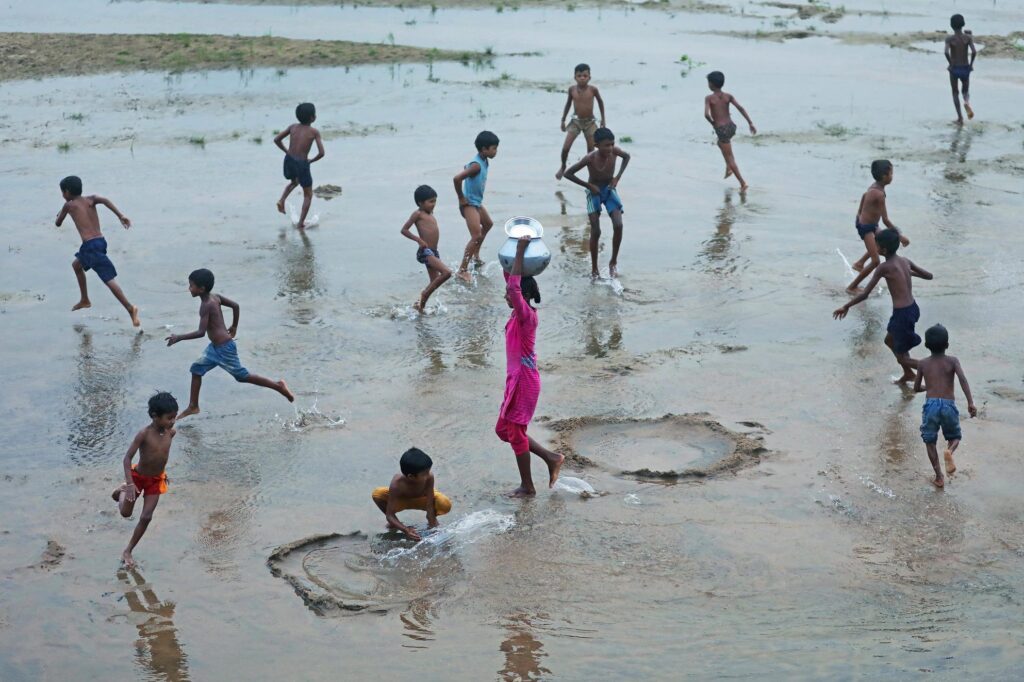
THE ENJOYMENT OF LIFE IS NOT FOR ALL, (Purulia , West Bengal , India – 2022), Barun Rajgaria
What the judges say:
‘Barun’s photograph moves with quiet clarity, translating the everyday into a meditation on gendered labour and inheritance. The judges were struck by the image’s fluid composition, its sense of movement, life, and landscape, and by how the young girl, framed at the centre, becomes the still point around which our gaze gathers.‘
How does justice, or its absence, shape the bonds between us? Who enforces the rules of belonging, and who chooses to break them?
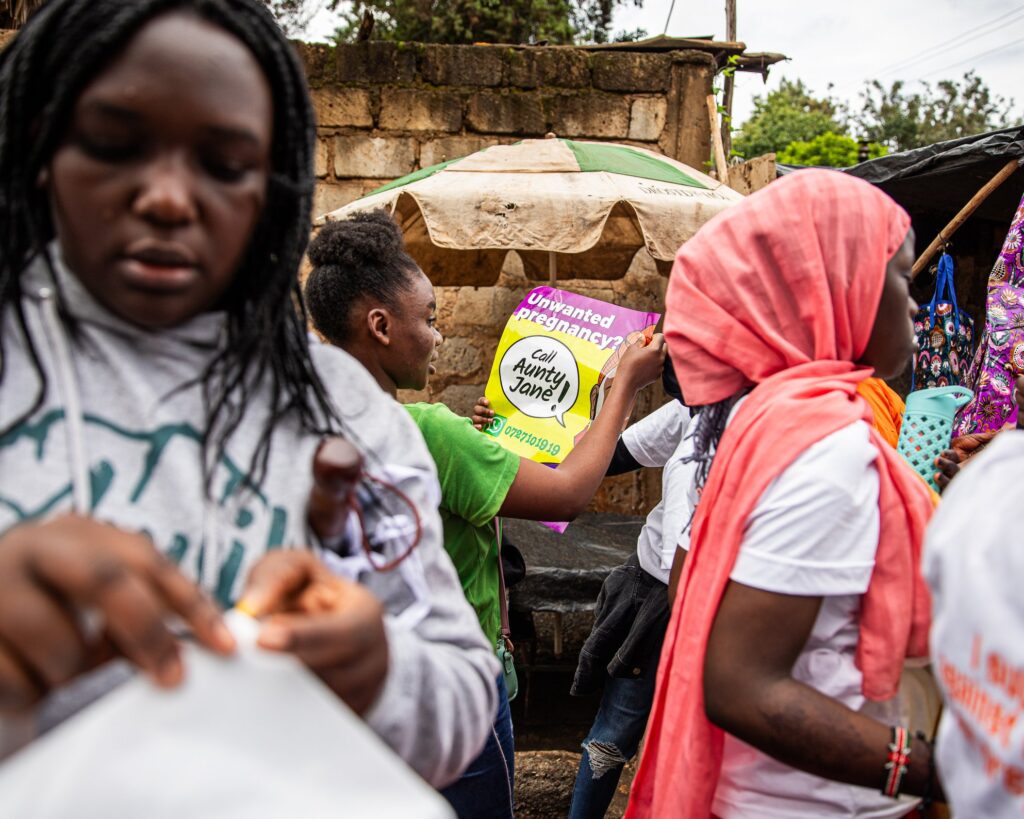
These works explore how law and justice are lived through relationships, shaping families, friendships, and communities marked by care, exclusion, and defiance. Power operates within the social itself: in the division of play between boys and girls, in the persecution of women branded as “witches,” and in the networks of solidarity that emerge to support those denied autonomy and safety.
Here, justice is relational, made and unmade through intimacy, kinship, and collective resistance. The social world becomes a field of negotiation, where gendered expectations collide with acts of protection, empathy, and refusal. These photographs reveal how our connections to one another, the fragile, everyday ties of trust and care, are also where justice begins.
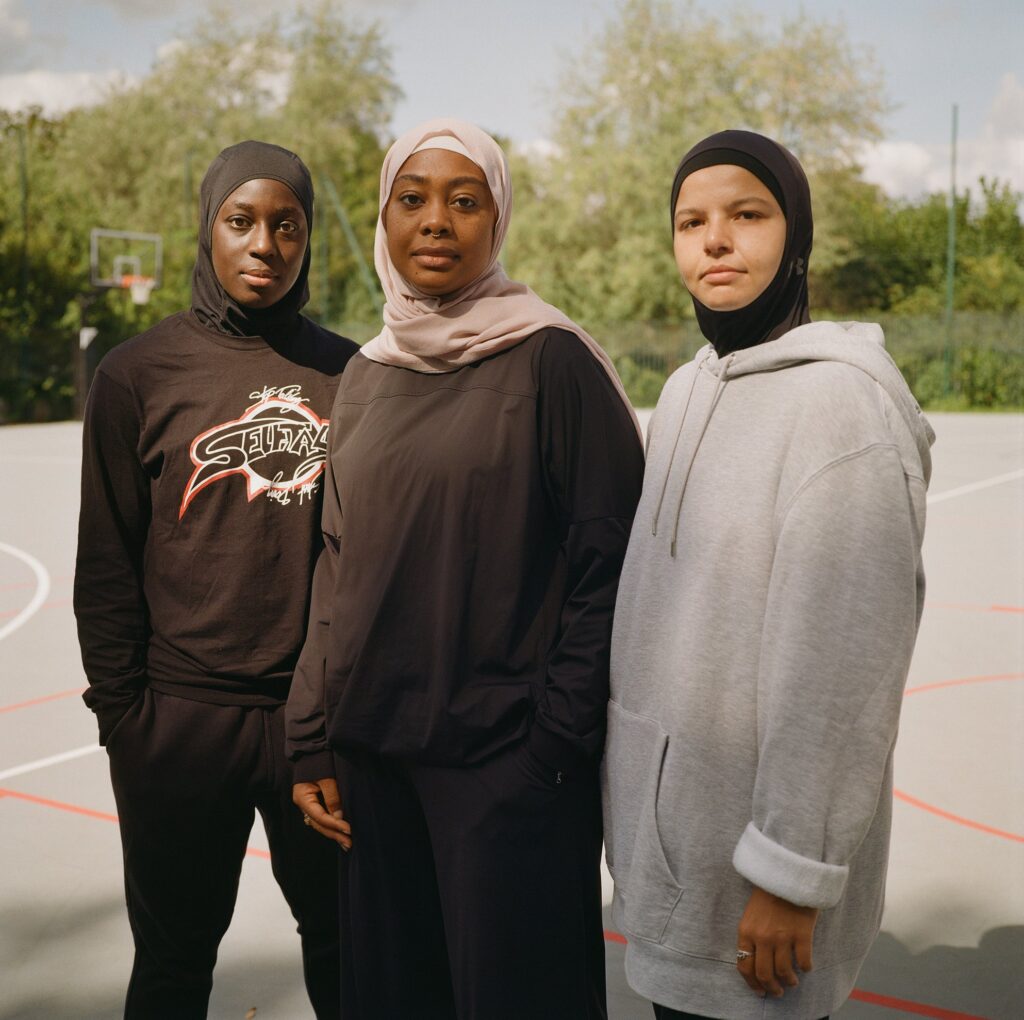
(Em)BODIES OF EVIDENCE
Winning image
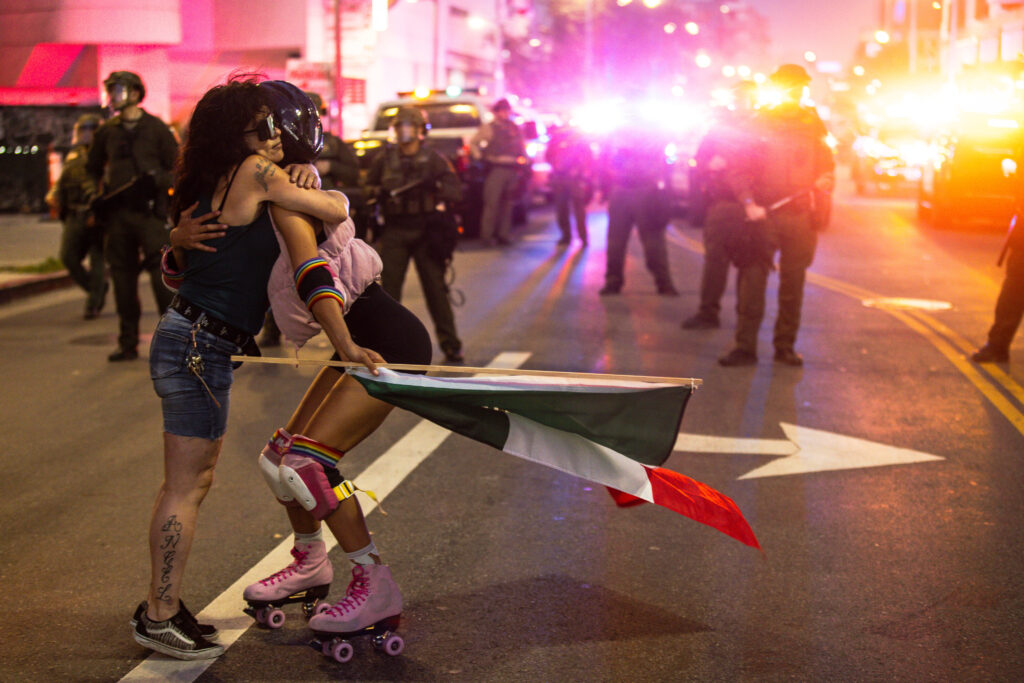
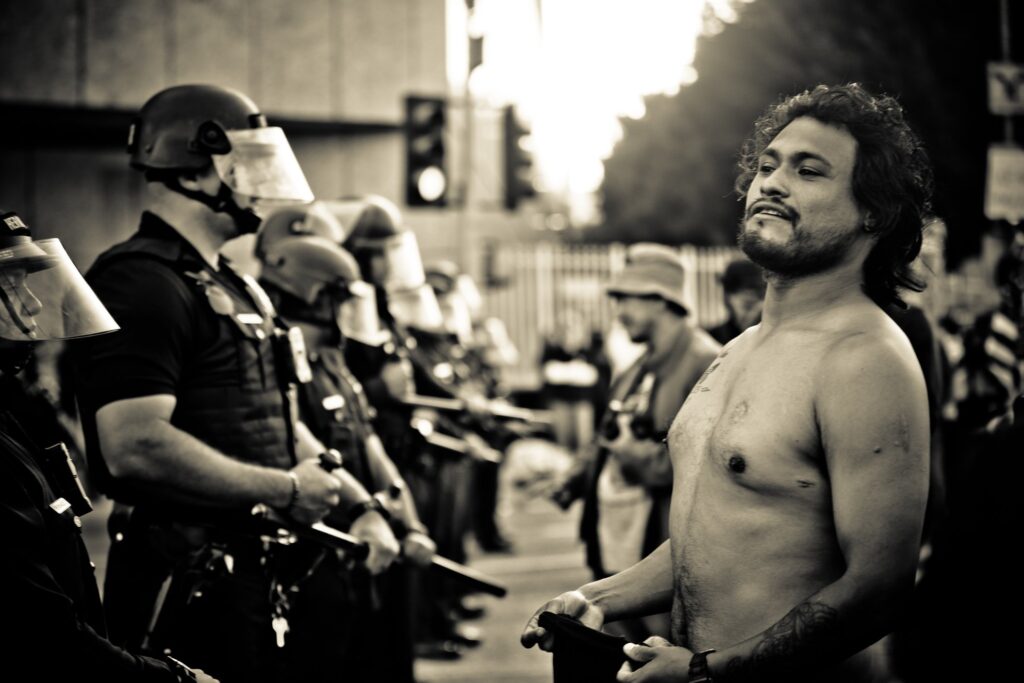
MARKED, (Downtown Los Angeles, California, USA – 2025), Lela Edgar
What the judges say:
‘This photograph confronts power through the language of the body. Stripped of spectacle, it stages defiance in its most elemental form — breath, posture, skin. The judges were struck by the immediacy of its composition: the raised chin, the unguarded chest, the charged space between protester and police. It transforms vulnerability into presence, capturing embodiment not as exposure, but as endurance — a body that refuses erasure and insists on being seen.’
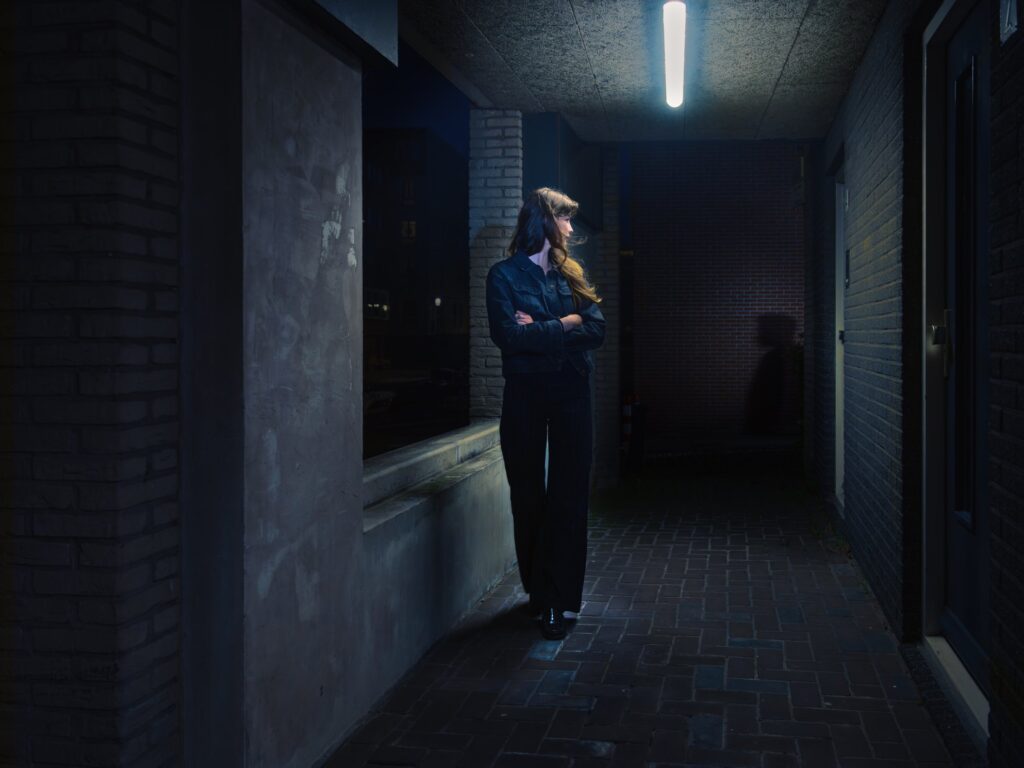
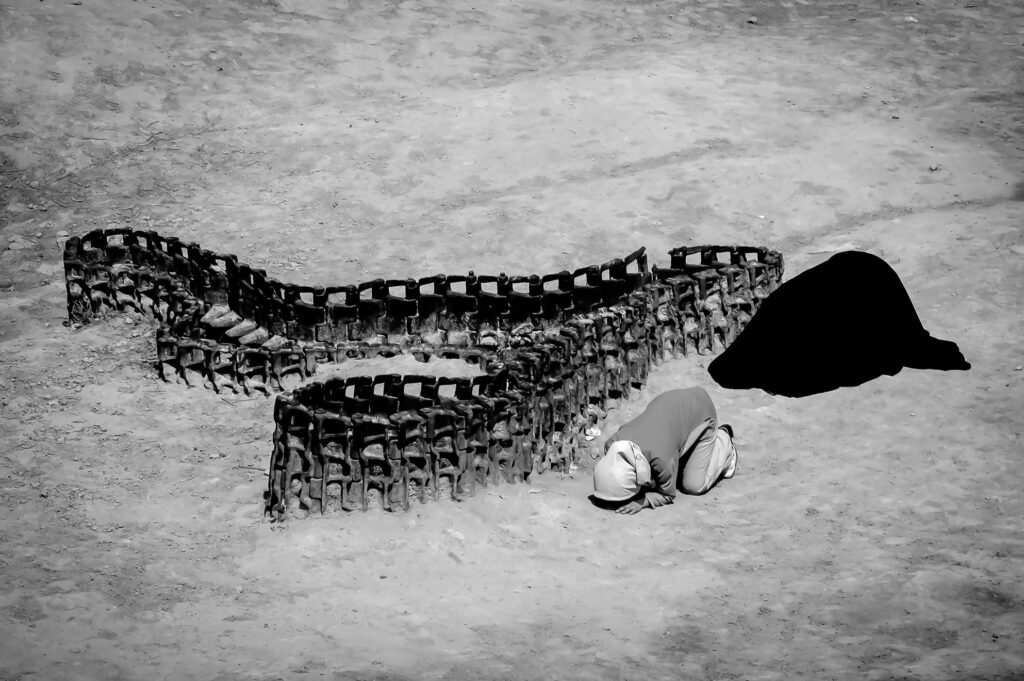
What does it mean to carry the weight of the law — on your body, your skin, your breath?
These works reveal how legal and political systems inscribe themselves onto the flesh and inhabit the self. Bodies become borders, evidence, and battlegrounds through everyday negotiations of autonomy, identity, and visibility.
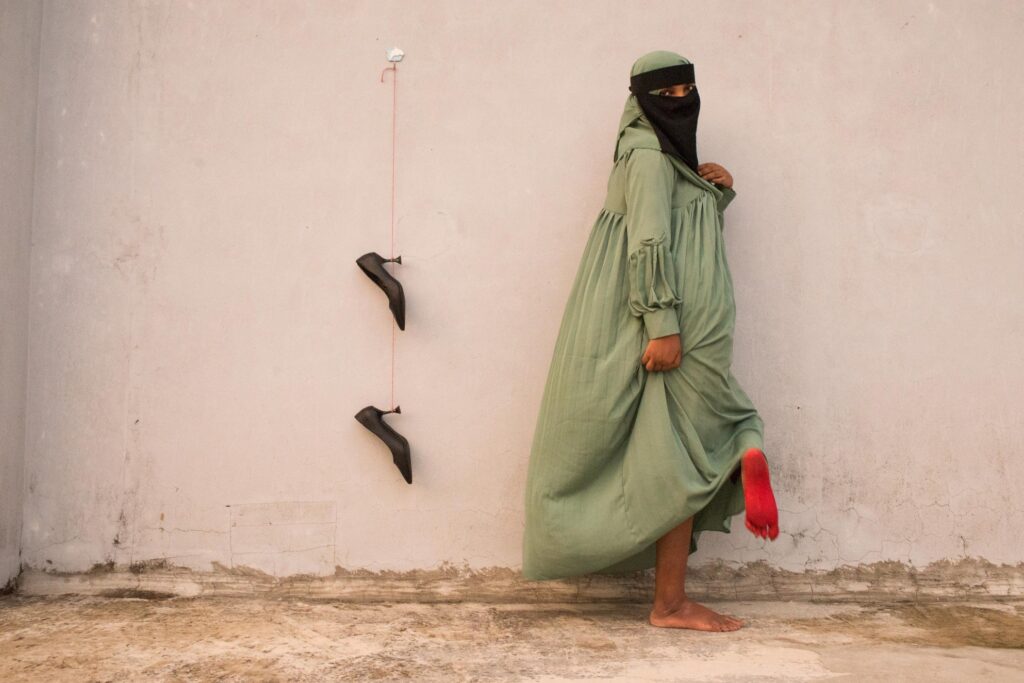
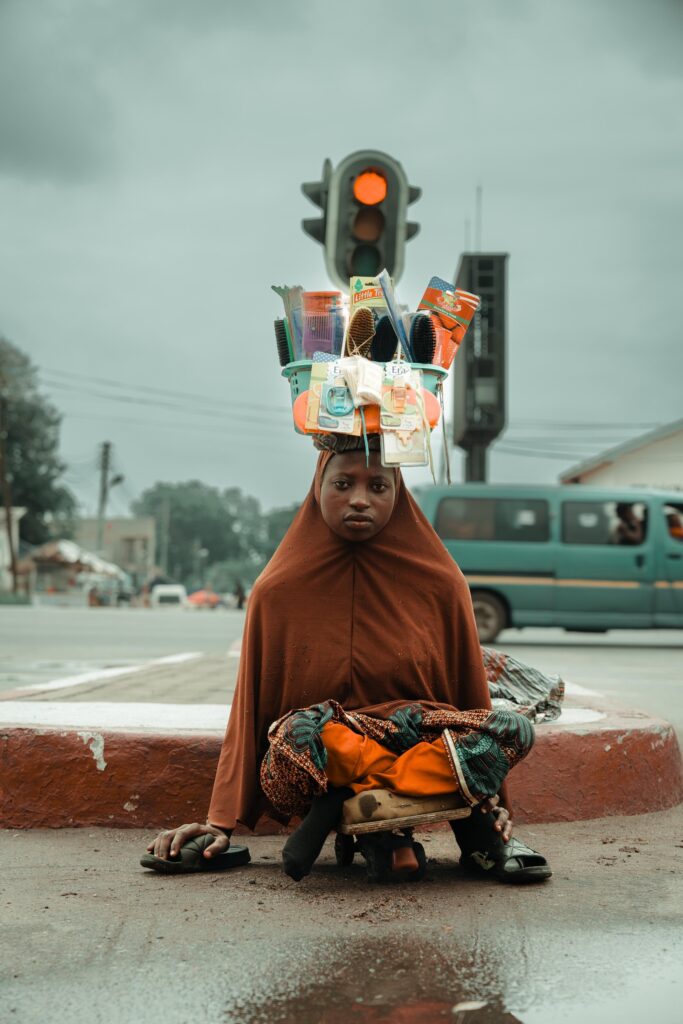
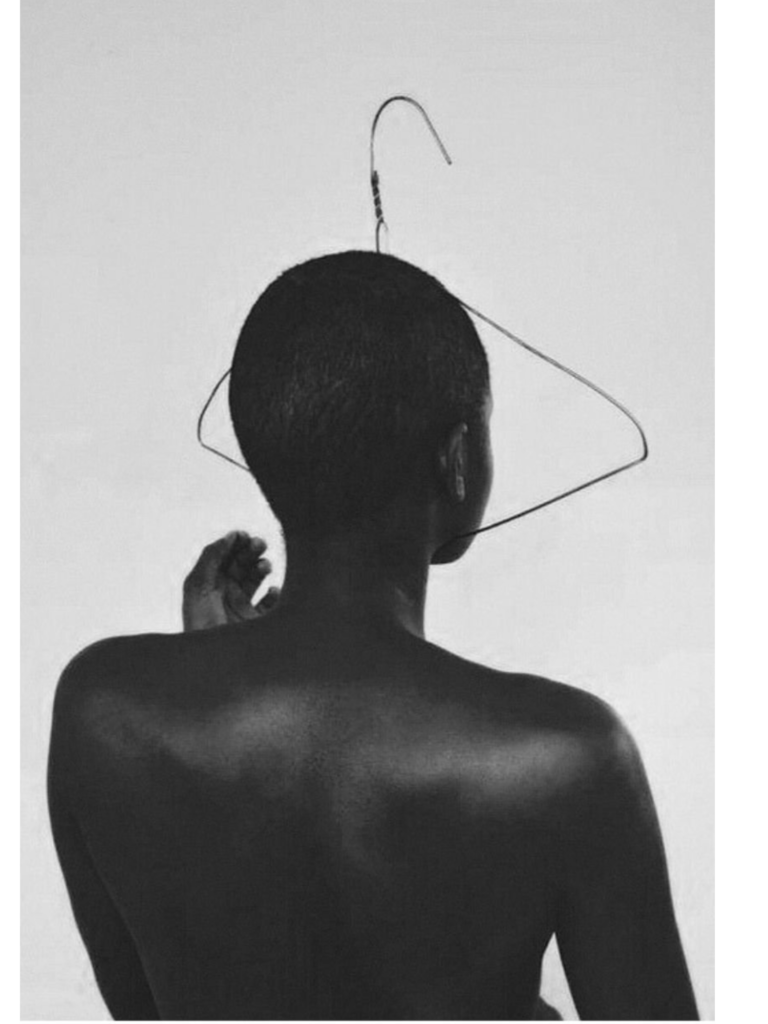
Here, justice is lived through risk, surveillance, and endurance, not as an abstract ideal but as a physical and psychological state — something felt in muscle, breath, and memory. A protester’s skin marked by plastic bullets bears the trace of state violence; a disabled street worker embodies exclusion enforced through policy, architecture, and stigma; while a portrait of reproductive control renders constrained choice through violent symbolism.
These images make the law visceral: seen in wounds, gestures, and self-portraits that refuse erasure. They expose how legal power is internalised, resisted, and reimagined — and how the struggle for justice is also the struggle to reclaim one’s own body, voice, and sense of self.
RADICAL VISIONS
Winning image
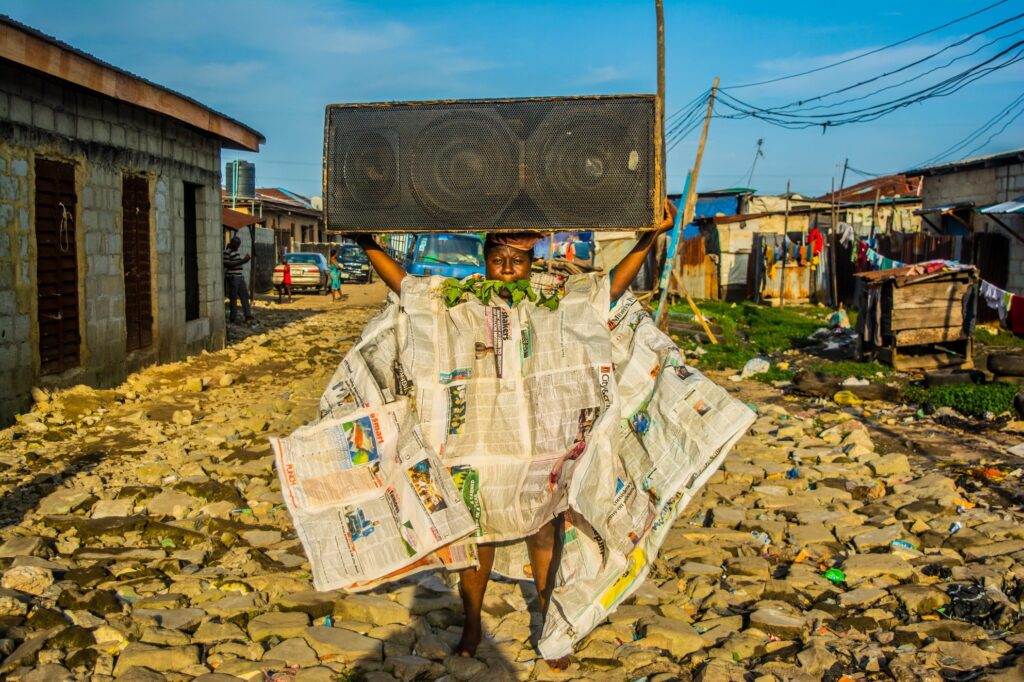
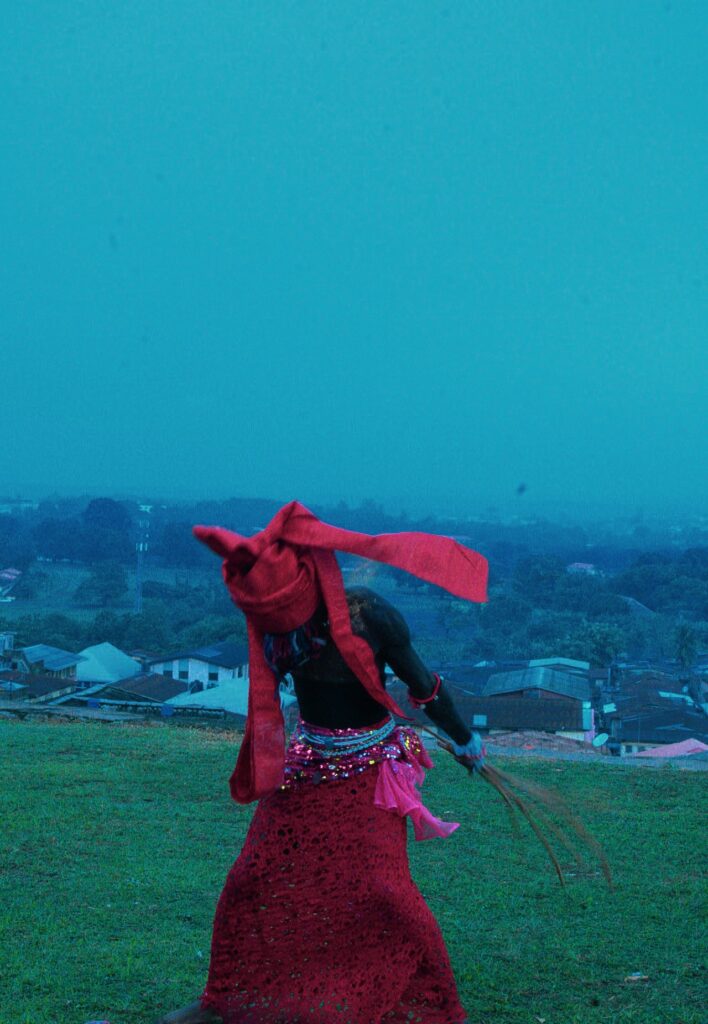
DEVELOPING YOUR VOICE, (Iwaya, Lagos, Nigeria – 2021), Ismail Odetola
What the judges say:
‘The judges were drawn to the bold symbolism and inventive staging. Transforming protest into performance, the work reclaims visibility through gesture, costume, and place. Both grounded and surreal, it channels frustration into form, imagining resistance not as rupture but as renewal.’
What does a just world look like, and who gets to imagine it?
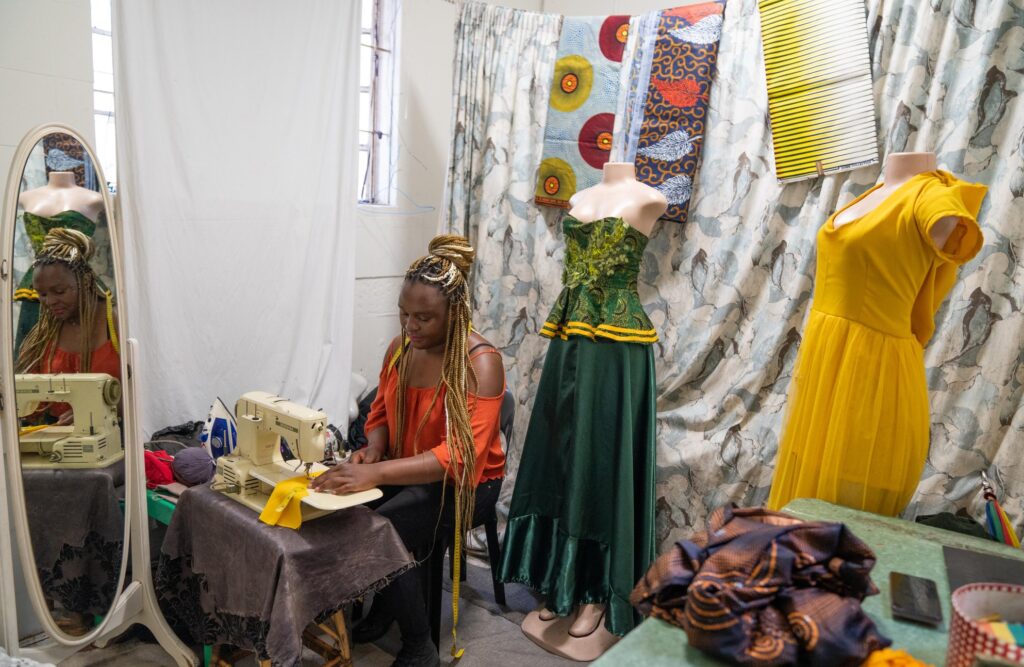
These artists look beyond existing systems of law, drawing on feminist, Indigenous, and decolonial traditions to envision justice differently. Their works reach back to ancestral knowledge and forward to liberated futures: rituals that recover pre-colonial understandings of gender; performers reclaiming visibility and safety through art; acts of protest, tenderness, and joy that insist compassion is itself a legal principle.
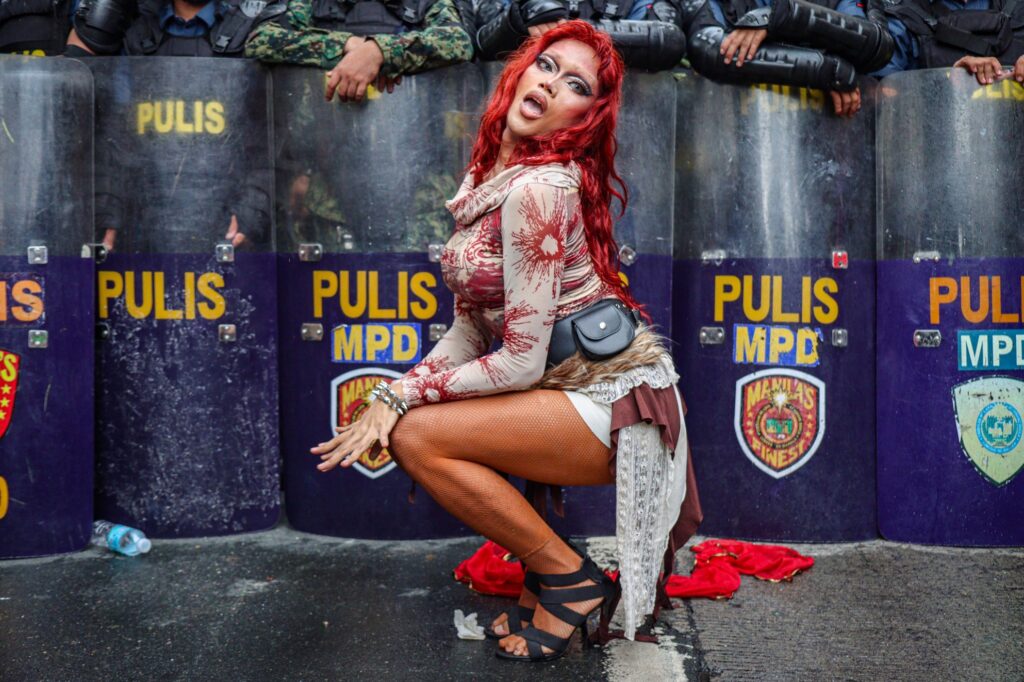
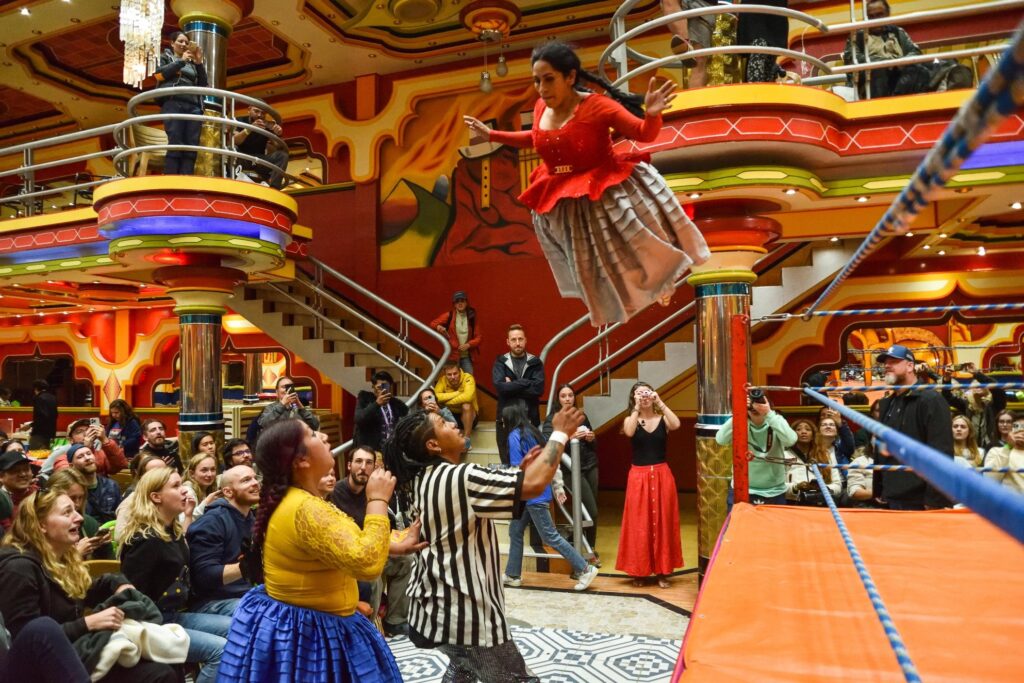
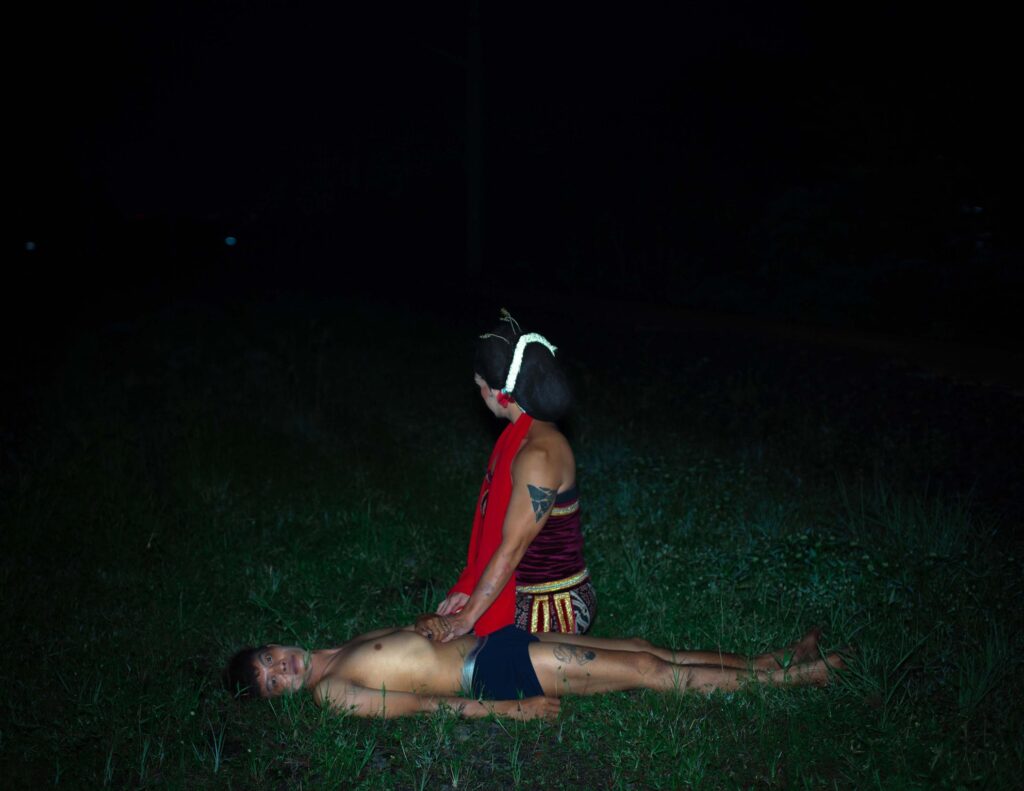
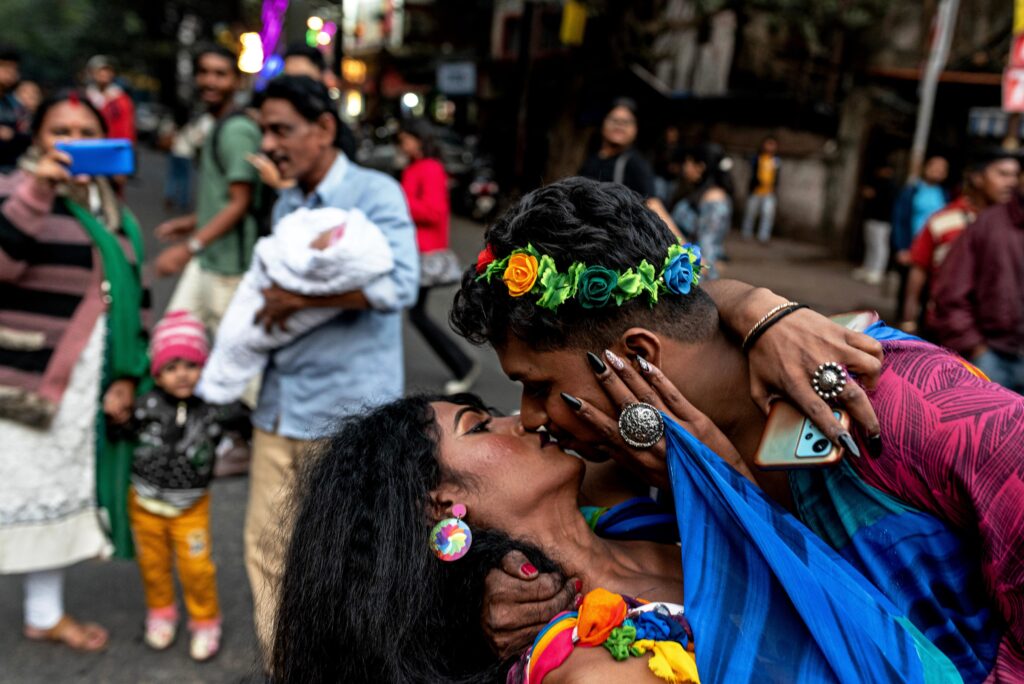
From drag performers facing militarised policing in the Philippines to trans refugees stitching new lives through craft, from cholitas wrestling as collective pride to couples kissing defiantly at Pride marches, these images summon worlds where dignity is not granted by law but lived as everyday practice.
Here, justice is imagined as care, kinship, and creativity — radical not because it breaks the law, but because it redefines its foundations. These artists use photography to transform documentation into dreamwork, visualising futures where fairness is felt, not decreed.
Ryan Andrew
The judging panel
The Counter-records images were selected from hundreds of submissions by a panel of distinguished judges whose expertise spans art, law, activism, gender studies, and visual culture. Their diverse perspectives and rigorous discussion brought depth and nuance to the selection process. We are deeply grateful for their time, care, and thoughtful engagement with the material, for the rich and fascinating dialogue that unfolded around each work, and for helping shape a collection that reflects the complexity and urgency of justice today.
Anne Kwakkenbos — Senior Gender Expert, Cordaid
Lydia Mardirian — Researcher in Photography, Arab Image Foundation
Tatiana Lopez — Documentary Photographer, Visual Anthropologist, Lecturer, Media University of Applied Science, and Member, Tawna Collective
Where next?
Dive into the data and insights behind This is Gender: Law & Justice, Global 50/50’s landmark analysis of gender equality across the global legal sector.
Step beyond the exhibition. Explore the full This is Gender collection and uncover hundreds of stories that reimagine gender, power, and justice.
Go behind the lens with our Representation Matters series.
Explore the creative processes, visual ethics, and behind-the-scenes stories of selected works from across the This is Gender collection.
Interested in collaborating or learning more? For press, partnership, or project inquiries, contact curator Imogen Bakelmun at imogen.bakelmun@global5050.org.